

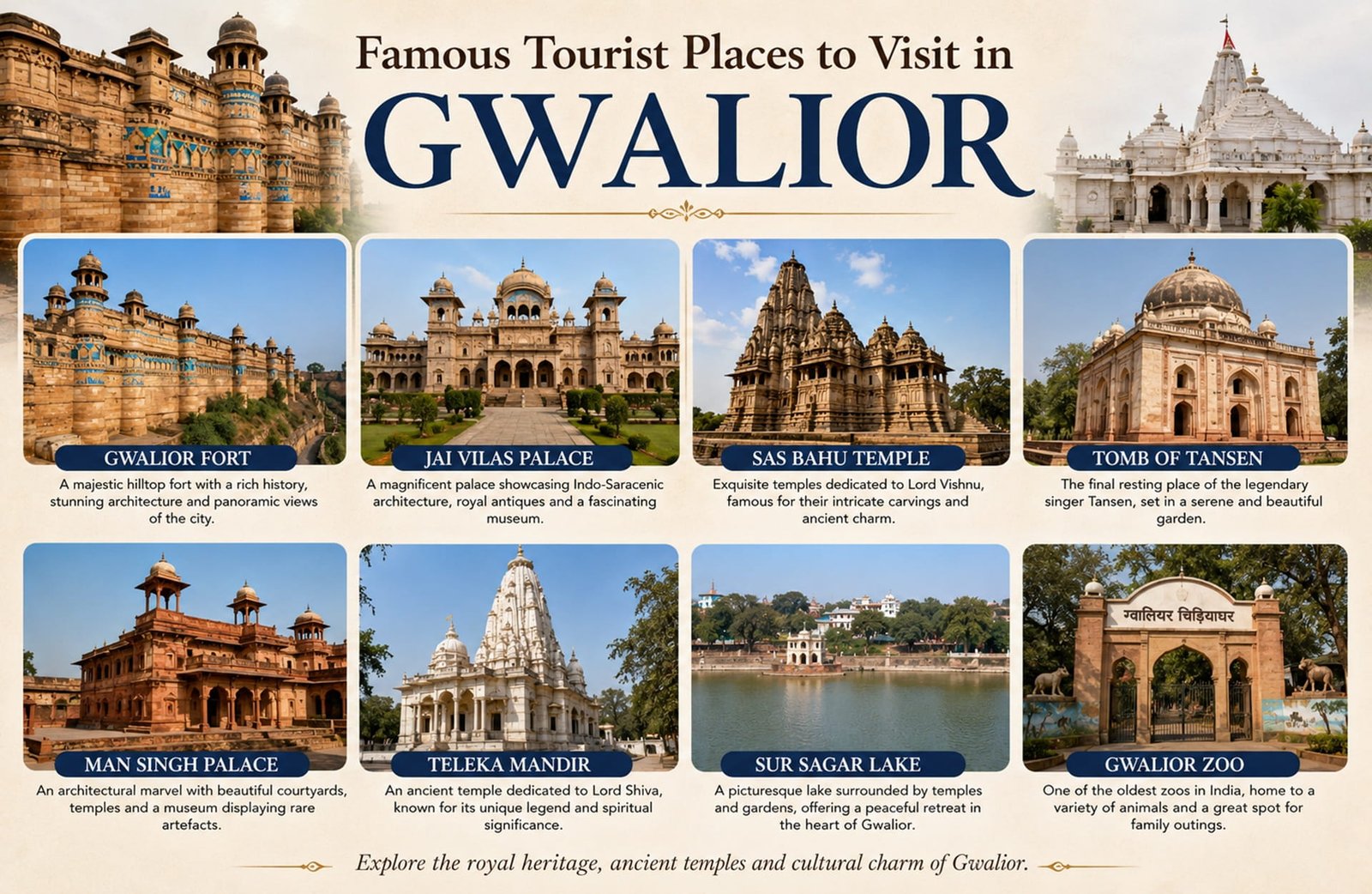
Known as the “City of Forts and Music,” Gwalior is one of the most fascinating historical destinations in India. Located in the northern part of Madhya Pradesh, the city boasts magnificent forts, royal palaces, ancient temples, museums, and serene natural attractions.
Gwalior has witnessed the rule of several dynasties, including the Tomars, Mughals, Marathas, and Scindias, each leaving behind remarkable architectural treasures. Whether you’re a history enthusiast, spiritual traveler, photographer, or family vacationer, Gwalior has something special to offer.
In this detailed travel guide, explore the top tourist attractions in Gwalior, the best time to visit, travel tips, local cuisine, and answers to frequently asked questions.
Top Famous Tourist Places to Visit in Gwalior
1. Gwalior Fort – The Pride of Gwalior
Often referred to as the “Gibraltar of India,” Gwalior Fort is the city’s most iconic landmark. Perched atop a sandstone hill, the fort offers panoramic views of the city and houses several historic structures within its complex.
Highlights:
- Massive defensive walls
- Intricate blue-tiled decorations
- Ancient temples and palaces
- Sound and Light Show
Timings:
9:00 AM to 5:00 PM
Best For:
History lovers, photographers, and architecture enthusiasts.
2. Jai Vilas Palace
Built in the 19th century by Maharaja Jayajirao Scindia, Jai Vilas Palace is a splendid example of European architecture blended with Indian elegance.
The palace is still the residence of the Scindia royal family, while a portion has been converted into a museum.
Major Attractions:
- World’s largest chandeliers
- Royal artifacts and furniture
- Vintage car collection
- Durbar Hall
Timings:
10:00 AM to 6:00 PM (Closed on Mondays)
3. Man Mandir Palace
Located within Gwalior Fort, Man Mandir Palace was constructed by Raja Man Singh Tomar in the 15th century.
The palace is famous for its beautiful latticework, colored tile decorations, and underground chambers.
Highlights:
- Stunning façade
- Ancient prison cells
- Historical significance
4. Sas Bahu Temple
Despite its name, Sas Bahu Temple has no connection with mothers-in-law and daughters-in-law. The name is derived from “Sahasrabahu,” meaning “One with a Thousand Arms,” referring to Lord Vishnu.
Built in the 11th century, these twin temples showcase exquisite Nagara-style architecture.
Highlights:
- Intricate carvings
- Ancient inscriptions
- Peaceful surroundings
5. Teli Ka Mandir
Teli Ka Mandir is the tallest temple in Gwalior Fort and dates back to the 8th century.
The temple reflects a unique fusion of North Indian and South Indian architectural styles.
Key Features:
- Towering shikhara
- Elaborate stone carvings
- Historic significance
6. Tomb of Tansen
Dedicated to the legendary musician Tansen, one of Emperor Akbar’s Navratnas, this tomb is an important cultural landmark.
Every year, the renowned Tansen Music Festival attracts artists and music lovers from across India.
Best For:
Music enthusiasts and cultural travelers.
7. Gujari Mahal Archaeological Museum
Originally built by Raja Man Singh Tomar for Queen Mrignayani, Gujari Mahal now serves as an archaeological museum.
Museum Collections:
- Ancient sculptures
- Jain artifacts
- Terracotta objects
- Historical relics from the region
Timings:
10:00 AM to 5:00 PM
8. Sun Temple
Inspired by the famous Sun Temple of Konark, Gwalior’s Sun Temple is a modern architectural marvel built by the Birla family.
Constructed using red sandstone, the temple attracts both devotees and tourists.
Highlights:
- Beautiful gardens
- Peaceful environment
- Stunning architecture
9. Gwalior Zoo
Officially known as Gandhi Prani Udyan, Gwalior Zoo is a popular family attraction.
Animals You Can See:
- Tigers
- Leopards
- Deer
- Crocodiles
- Various bird species
Ideal For:
Families traveling with children.
10. Tighra Dam
Located approximately 23 kilometers from Gwalior city, Tighra Dam is a perfect getaway for nature lovers.
The reservoir offers breathtaking sunset views and recreational activities.
Activities:
- Boating
- Photography
- Picnics
- Birdwatching
Best Time to Visit Gwalior
Winter (October to March)
Temperature: 8°C to 25°C
This is the best season to explore Gwalior’s outdoor attractions comfortably.
Summer (April to June)
Temperature: 30°C to 45°C
Sightseeing can be challenging due to intense heat.
Monsoon (July to September)
The city becomes greener and less crowded, making it a pleasant time for budget travelers.
How to Reach Gwalior
By Air
Nearest Airport:
- Rajmata Vijaya Raje Scindia Airport (Gwalior Airport)
By Train
Gwalior Junction is one of the major railway stations in North India and is well-connected to Delhi, Mumbai, Agra, and other cities.
By Road
Gwalior is connected via national highways to major cities including:
- Delhi (approximately 340 km)
- Agra (approximately 120 km)
- Jhansi
- Bhopal
Suggested 2-Day Gwalior Itinerary
Day 1
- Gwalior Fort
- Man Mandir Palace
- Sas Bahu Temple
- Teli Ka Mandir
- Sound and Light Show
Day 2
- Jai Vilas Palace
- Gujari Mahal Museum
- Tomb of Tansen
- Sun Temple
- Tighra Dam
Local Foods to Try in Gwalior
During your visit, don’t miss these local delicacies:
- Bedai with aloo sabzi
- Kachori
- Poha and jalebi
- Bhutte ka kees
- Gajak (especially during winter)
- Traditional Madhya Pradesh thali
Shopping in Gwalior
Popular items to buy include:
- Handicrafts
- Leather goods
- Chanderi and Maheshwari textiles
- Local sweets and gajak
Essential Travel Tips for Gwalior
- Wear comfortable footwear for fort exploration.
- Carry water bottles during sightseeing.
- Visit early in the morning to avoid crowds.
- Hire a local guide to understand the historical significance of monuments.
- Respect religious sites and follow local customs.
- Keep a camera ready—Gwalior offers excellent photography opportunities.
Frequently Asked Questions (FAQs)
Why is Gwalior famous?
Gwalior is famous for its majestic fort, royal palaces, historic temples, classical music heritage, and the annual Tansen Music Festival.
How many days are sufficient for Gwalior?
A 2 to 3-day trip is ideal for exploring the major attractions comfortably.
What is the best time to visit Gwalior?
October to March is considered the best time due to pleasant weather conditions.
Is Gwalior Fort worth visiting?
Absolutely. Gwalior Fort is one of India’s most impressive hill forts and a UNESCO World Heritage tentative site.
Can I visit Tighra Dam in one day from Gwalior?
Yes. Tighra Dam is located around 30–40 minutes from the city and makes for an excellent half-day excursion.
Is Gwalior safe for tourists?
Yes, Gwalior is generally safe for tourists. Standard travel precautions should always be followed.
Final Thoughts
Gwalior beautifully combines royal grandeur, architectural brilliance, spiritual heritage, and natural beauty. From exploring the magnificent Gwalior Fort and admiring the opulence of Jai Vilas Palace to relaxing by the peaceful waters of Tighra Dam, every corner of the city tells a story of India’s rich past.
Whether you’re planning a weekend getaway, a family vacation, or a heritage tour of Madhya Pradesh, Gwalior deserves a place on your travel bucket list.
Pack your bags and get ready to experience the timeless charm of this historic city.