



Phú Quốc – Vietnam’s Largest Island
Phu Quoc is Vietnam’s largest island and one of Southeast Asia’s most popular tropical holiday destinations. Located in the Gulf of Thailand, it combines white-sand beaches, forested hills, fishing communities, luxury resorts, lively entertainment complexes and some of Vietnam’s most distinctive local food traditions.
The island has approximately 150 kilometres of coastline, while more than half of its land has been protected within a UNESCO-recognised biosphere reserve since 2006. Visitors can spend one day relaxing beside the sea and the next exploring forests, waterfalls, fishing villages, pepper farms or modern theme parks.
Vietnam Tour
Phu Quoc at a Glance
| Category | Details |
|---|---|
| Country | Vietnam |
| Region | Gulf of Thailand |
| Main town | Duong Dong |
| Airport | Phu Quoc International Airport |
| Best season | October to March |
| Hottest months | April and May |
| Rainiest period | Approximately July to October |
| Ideal trip length | Four to six days |
| Popular beaches | Long Beach, Sao Beach, Ong Lang and Ganh Dau |
| Popular activities | Island tours, snorkelling, cable car rides, markets and theme parks |
| Local specialities | Seafood, fish sauce, black pepper and pearl products |
Why Visit Phu Quoc?
Phu Quoc offers a wider variety of experiences than a typical beach resort. Travellers can stay in an affordable guesthouse near Duong Dong, book a private-pool villa on the coast or choose a large family resort near the island’s entertainment attractions.
Its western coastline is particularly popular for sunset views. Long Beach stretches for around 20 kilometres and contains a broad selection of restaurants, beach bars and accommodation. Quieter northern areas such as Ganh Dau and Bai Thom retain a more natural atmosphere.
The island is also known for fish sauce, locally cultivated black pepper and pearl farming. A visit to a fish-sauce factory, pepper plantation or traditional fishing community introduces travellers to the industries that supported Phu Quoc long before large resorts arrived.
Best Places to Visit in Phu Quoc
1. Long Beach
Long Beach, or Bai Truong, is one of the most accessible and developed parts of Phu Quoc.
The beach runs along the island’s western coast and is particularly well known for sunset views. Its central location provides easy access to hotels, restaurants, cafés and Duong Dong. Vietnam’s official tourism site describes it as a roughly 20-kilometre stretch with unobstructed sunset views.
Long Beach is a practical choice for first-time visitors who want to remain close to the airport and town while still enjoying a beachfront holiday.
2. Sao Beach
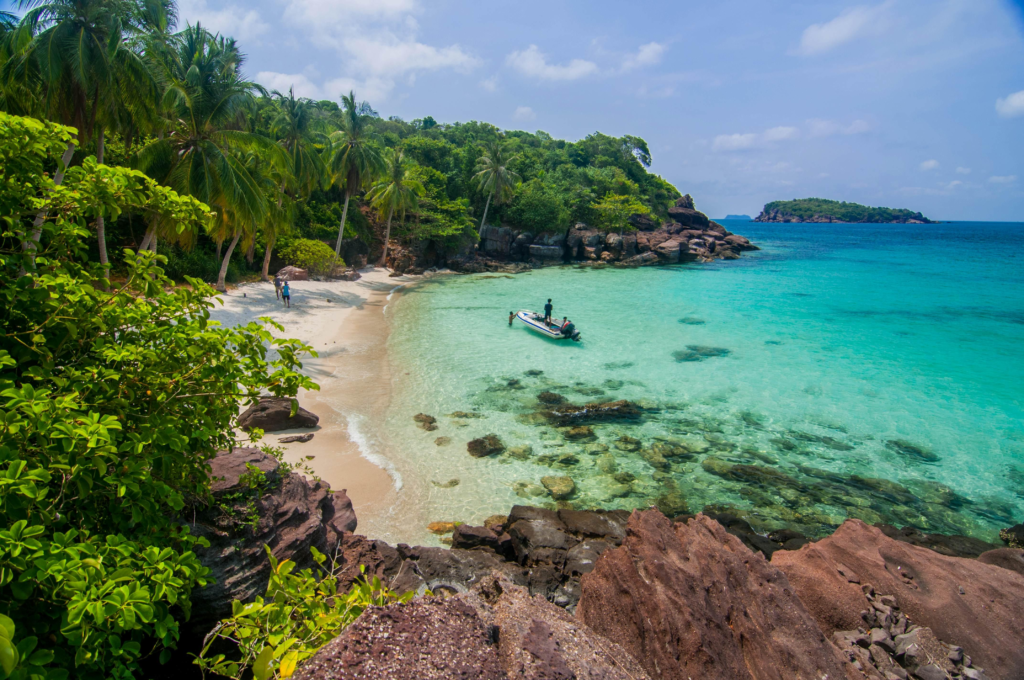
Sao Beach is one of Phu Quoc’s most photographed coastal attractions. Located near An Thoi in the south, it is known for light-coloured sand, palm trees and shallow turquoise water.
The official Vietnam Tourism guide describes Sao Beach as a stretch of more than seven kilometres, approximately 25 kilometres from central Phu Quoc. Popular activities include swimming, kayaking, fishing, snorkelling and relaxing beneath the trees.
Conditions can change with the seasons, tides and wind direction. Visit earlier in the morning for a quieter atmosphere and softer sunlight.
3. Ong Lang Beach
Ong Lang offers a more peaceful environment than the busiest section of Long Beach. The coastline contains smaller sandy areas separated by rocks and vegetation.
It is particularly suitable for couples, families and travellers seeking a relaxed resort stay away from the island’s largest entertainment areas. Vietnam Tourism highlights Ong Lang as a pristine beach suited to family visits.
4. Rach Vem Fishing Village
Rach Vem is a northern fishing community known for stilt houses, floating restaurants and calm coastal scenery.
It is also associated with “Starfish Beach,” where red starfish may be visible in shallow water during suitable seasonal conditions. Visitors should not lift, touch or move the starfish because doing so can harm them.
The access road can become difficult after heavy rain, so check local conditions before travelling by scooter or car.
5. Hon Thom Cable Car
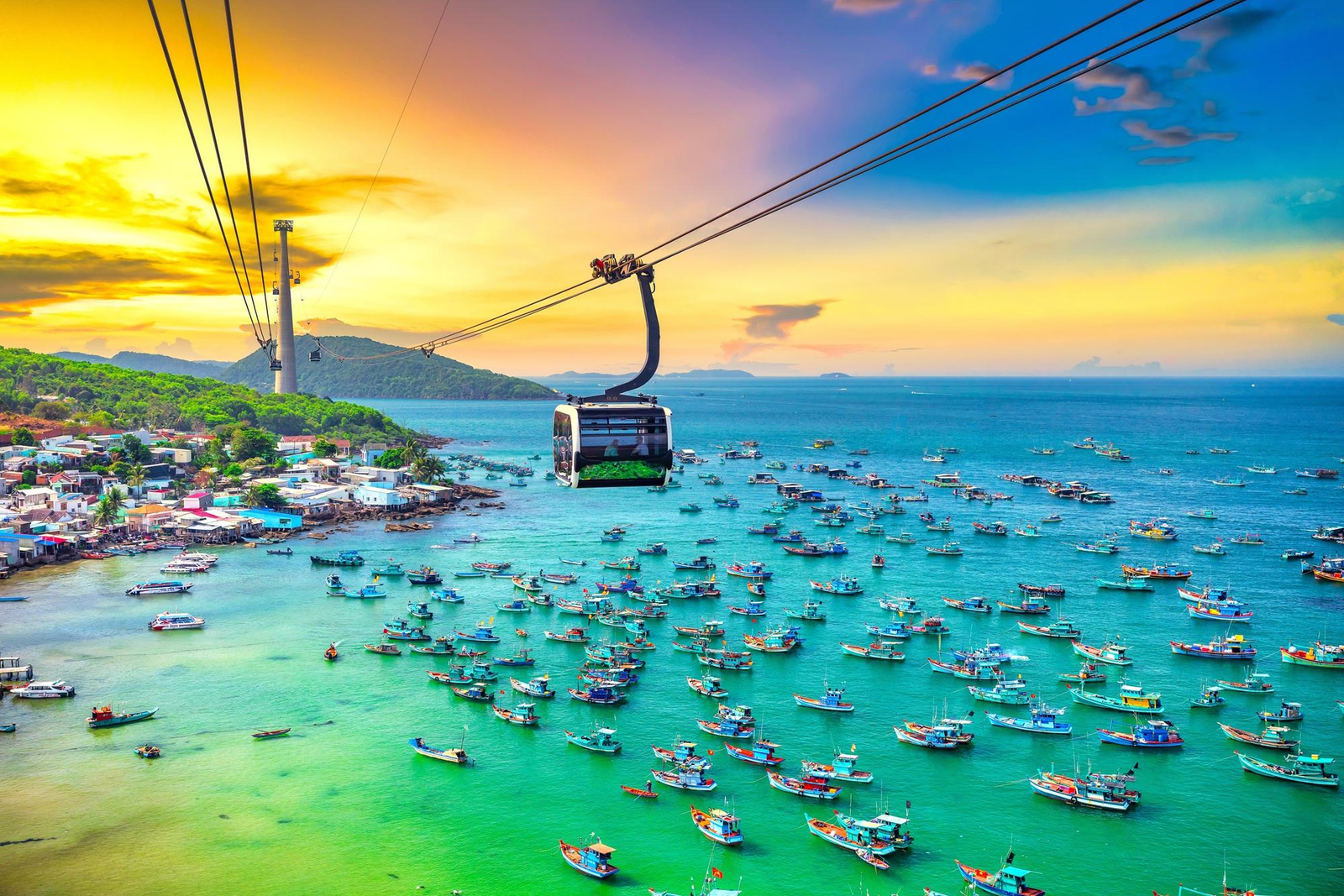
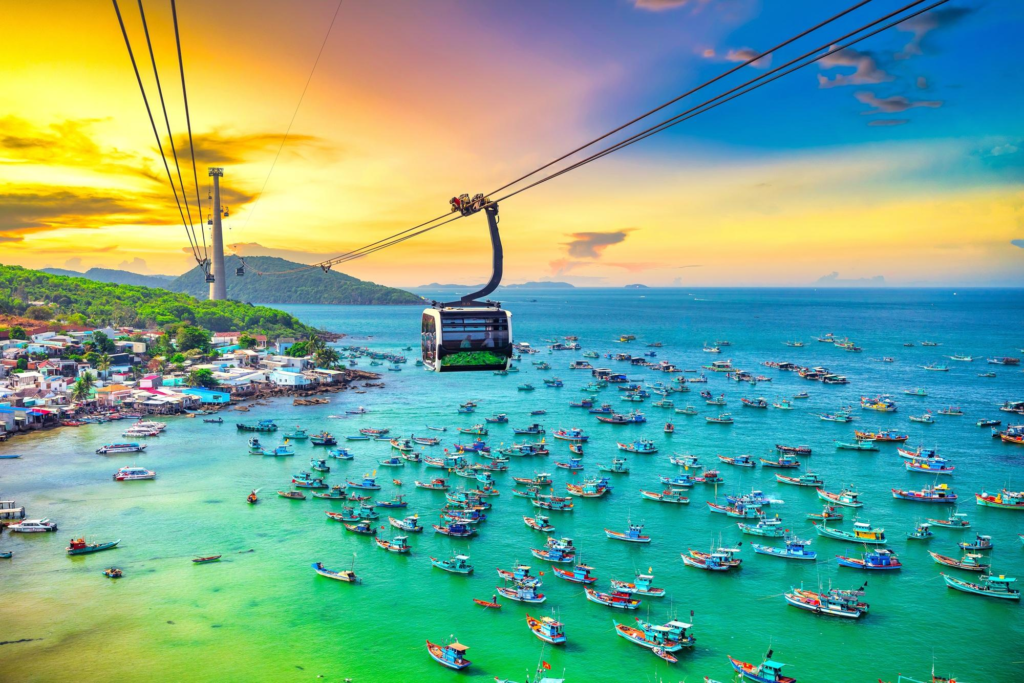
The Hon Thom cable car connects An Thoi with Hon Thom Island across the southern archipelago.
The route covers 7,899.9 metres and has been recognised as the world’s longest three-wire cable-car system. The journey takes approximately 15 minutes and provides aerial views of turquoise water, islands and fishing boats.
Cable-car schedules can change because of weather, maintenance or seasonal operations. Check the official Sun World schedule on the day of travel rather than relying on an older timetable.
6. Sunset Town and Kiss Bridge
Sunset Town is a Mediterranean-inspired entertainment district in southern Phu Quoc. It contains colourful buildings, restaurants, waterfront viewpoints, evening performances and the distinctive Kiss Bridge.
The area is best visited during late afternoon so that travellers can explore the waterfront before sunset and remain for the evening atmosphere. Show schedules and ticketed experiences change seasonally and should be confirmed before arrival.
7. Duong Dong Night Market
Duong Dong Night Market is one of the best places to experience Phu Quoc after sunset.
Stalls sell grilled seafood, noodles, snacks, desserts, fruit, souvenirs, pepper products and pearl jewellery. Prices can vary considerably, so check menus and confirm seafood prices before ordering.
The market is also conveniently located for travellers staying near the central section of Long Beach.
8. Phu Quoc National Park
Phu Quoc’s interior contains evergreen forest, mountains, streams, caves, waterfalls and walking routes. The protected landscape provides a welcome contrast to the developed beach areas.
Vietnam Tourism notes that even short walks through the forest can lead to rock pools, waterfalls and caves, while longer routes appeal to more adventurous visitors.
Trail conditions can become slippery during the wet season. Wear suitable footwear and avoid isolated routes during heavy rain.
9. VinWonders Phu Quoc
VinWonders is a large theme and water park in northern Phu Quoc. Its zones include European Avenue, Fantasy World, Viking-themed attractions, an aquarium, thrill rides and a water park.
The operator’s 2026 schedule lists general opening from 9:00 a.m. to 7:30 p.m., although individual zones and shows follow separate timetables. Vinpearl Safari, located nearby, is listed as operating from 8:30 a.m. to 4:00 p.m.
Families can combine the safari and theme park, but experiencing both completely in one day can feel rushed.
10. Phu Quoc Prison
Phu Quoc Prison, also called Coconut Tree Prison, is a historical site documenting wartime imprisonment and conditions experienced by detainees.
It provides a serious and educational contrast to the island’s resort attractions. Visitors should approach the exhibitions respectfully because some displays portray violence and suffering.
Vietnam Tourism includes the site among Phu Quoc’s important cultural and historical attractions.
Best Time to Visit Phu Quoc
Phu Quoc remains warm throughout the year, with average temperatures around 27°C. The cooler and drier period generally runs from October to March, making these months the most comfortable for beaches, boat trips and outdoor sightseeing.
April and May are generally the hottest months. Rain begins to increase during this period, while July to October forms the main wet season, bringing cooler temperatures but heavier rainfall and less predictable sea conditions.
Travelling in the rainy season can provide lower accommodation prices and fewer crowds, but boat tours, cable-car services and water activities may be delayed or cancelled.
How to Reach Phu Quoc
By Air
Phu Quoc International Airport handles domestic and selected international flights through a single passenger terminal. The island is connected with major Vietnamese cities, and a flight from Ho Chi Minh City typically takes about one hour.
Book Ticket with Vietnam Airlines
Many travellers from India reach Phu Quoc through Ho Chi Minh City, Hanoi or another Asian gateway. Available routes can change seasonally, so confirm the operating carrier, baggage rules and transit requirements before booking.
By Ferry
Ferries connect Phu Quoc with mainland southern Vietnam, including routes through Kien Giang province. Services can be disrupted by weather, especially when sea conditions deteriorate.
Flying is generally more convenient for international visitors, while a ferry can suit travellers combining Phu Quoc with a longer journey through the Mekong Delta.
Getting From the Airport to Your Hotel
Duong Dong can be reached from Phu Quoc International Airport by public bus, taxi, ride-hailing service or prearranged hotel transfer.
Vietnam Airlines’ current guide estimates approximately 25–35 minutes by taxi, with typical fares of VND 180,000–220,000. Ride-hailing services are listed at roughly VND 150,000–220,000, while the public bus costs around VND 50,000 but may take 45–60 minutes. Prices and travel times can change with traffic and demand.
Use registered airport taxi queues and confirm whether your resort provides a complimentary transfer before paying for another service.
Where to Stay in Phu Quoc
Duong Dong and Central Long Beach
Choose this area for markets, restaurants, nightlife, airport convenience and a wide range of hotels. It is ideal for first-time visitors and travellers without private transport.
Ong Lang
Ong Lang suits couples and families seeking a quieter beachfront environment while remaining within reasonable driving distance of Duong Dong.
Northern Phu Quoc
Stay in the north for easy access to VinWonders, Vinpearl Safari, Grand World and Ganh Dau. The area is convenient for resort holidays but farther from Duong Dong and southern attractions.
An Thoi and Southern Phu Quoc
The south is best for Sao Beach, Hon Thom Cable Car, Sunset Town and tours of the An Thoi islands.
Travellers planning to explore the entire island should consider dividing their stay between the central or northern coast and the south.
What to Eat in Phu Quoc
Fresh seafood is central to the island’s food culture. Popular choices include grilled fish, squid, prawns, crab, shellfish and seafood hotpot.
Phu Quoc is nationally famous for its fermented fish sauce and locally grown black pepper. Fishing villages such as Ham Ninh provide opportunities to eat fresh seafood at waterfront or floating restaurants.
Other dishes and products worth trying include:
- Bun quay, a noodle dish served with freshly mixed seafood paste
- Herring salad
- Grilled sea urchin
- Crab rice
- Pepper-seasoned seafood
- Sim fruit drinks and preserves
- Tropical fruit and coconut desserts
Check the price by weight before ordering live seafood.
Suggested Four-Day Phu Quoc Itinerary
Day 1: Arrival and Duong Dong
Check into your hotel and relax at Long Beach. Visit Duong Dong Night Market in the evening for seafood and local snacks.
Day 2: Southern Phu Quoc
Visit Sao Beach in the morning. Continue to An Thoi for the Hon Thom cable car, then spend the late afternoon and evening at Sunset Town.
Day 3: Northern Phu Quoc
Choose between VinWonders and Vinpearl Safari, or spend a slower day exploring Ganh Dau and Rach Vem. Visitors attempting both major parks should begin early and follow the latest operating timetable.
Day 4: Culture and Local Products
Visit a pepper farm, fish-sauce producer and Phu Quoc Prison. Return to the western coast for a final sunset.
Visa Information
Vietnam currently offers electronic visas to citizens of all countries and territories. The national e-visa can be valid for up to 90 days and may permit single or multiple entries, depending on the visa issued. Phu Quoc International Airport is an approved e-visa entry point.
Foreign visitors entering Phu Quoc from overseas may qualify for a separate visa exemption of up to 30 days under specific conditions. Travellers planning to leave Phu Quoc and visit mainland Vietnam should obtain the appropriate Vietnam visa unless they qualify for another national exemption.
Indian passport holders should verify their exact eligibility and itinerary through Vietnam’s official immigration portal before departure.
Important Boat and Water-Safety Advice
In July 2026, a speedboat capsized shortly after leaving Hon May Rut Ngoai Island near Phu Quoc, killing 15 Indian tourists. Vietnamese authorities opened an investigation and ordered a review of waterway and maritime-safety procedures.
Travellers taking island or snorkelling tours should:
- Use established, licensed operators.
- Check the weather and sea forecast.
- Confirm that working lifejackets are available for every passenger.
- Wear the lifejacket throughout the journey.
- Avoid boarding an overcrowded vessel.
- Cancel or postpone the trip when wind and waves appear unsafe.
Do not allow a prepaid booking to pressure you into travelling during poor conditions.
Frequently Asked Questions
Is Phu Quoc worth visiting?
Yes. Phu Quoc combines beaches, forests, local food, fishing communities, family attractions and modern resorts in one destination. Its long coastline and protected natural areas make it suitable for both relaxation and exploration.
How many days are enough for Phu Quoc?
Four days are sufficient for the principal attractions. Five or six days provide more time for beaches, island tours and a slower resort stay.
Which is the best beach in Phu Quoc?
Sao Beach is popular for pale sand and turquoise water, while Long Beach is convenient for sunsets and accommodation. Ong Lang is better suited to travellers seeking a quieter environment.
What is the best month to visit?
The dry period from October to March generally provides the most comfortable weather. December to February is especially popular, although accommodation demand can be higher.
Does Phu Quoc have an international airport?
Yes. Phu Quoc International Airport handles domestic and selected international flights through a single terminal.
Can Indian travellers visit Phu Quoc without a visa?
A 30-day Phu Quoc-specific visa exemption may apply to foreign visitors arriving under the required conditions and remaining within the eligible area. Indian travellers planning to visit mainland Vietnam should normally obtain an appropriate e-visa unless another exemption applies.
Is Phu Quoc suitable for families?
Yes. Beaches, family resorts, VinWonders and Vinpearl Safari make the island suitable for children. Check height restrictions, pool safety and transport distances before booking activities.
Final Thoughts
Phu Quoc offers much more than beautiful beaches. Its appeal comes from the combination of tropical scenery, fishing traditions, protected forests, local cuisine, modern entertainment and accommodation for almost every travel style.
First-time visitors should divide their time between the western coast, southern attractions and at least one northern or cultural experience. Long Beach provides convenience, Sao Beach delivers classic island scenery, and the Hon Thom cable car offers one of Phu Quoc’s most distinctive views.
Plan around the weather, confirm current visa conditions and select water-activity operators carefully. With thoughtful preparation, Phu Quoc can be an excellent destination for couples, families, groups and travellers seeking a relaxing Vietnamese island holiday.